Have you really hit a plateau? What a recovery plateau is, and what it usually isn’t
Published on
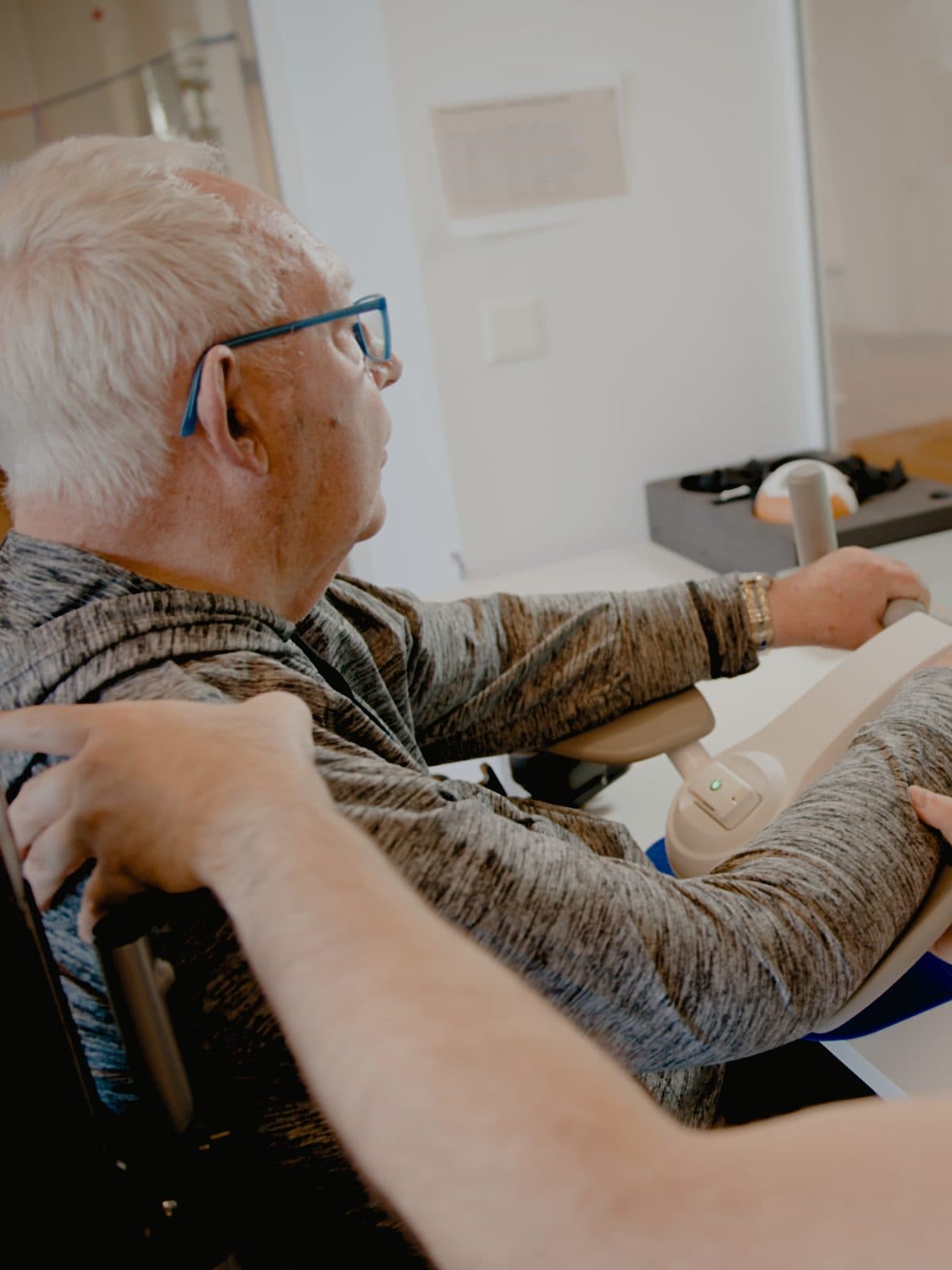
At some point in a long rehabilitation, many people are told the same thing: you have plateaued. It is one of the heaviest words in neurorehabilitation, and it is used far more loosely than most patients realise. Sometimes it describes a genuine levelling off. Often it describes something quite different: a drop in therapy hours, a run of difficult weeks, or the simple fact that nobody was measuring closely enough to see what was still moving.
If you have been told your recovery has stopped, it is worth knowing what that word actually covers.
Where the word comes from
“Plateau” entered rehabilitation partly as a clinical observation and partly as an administrative one. Rates of change are steepest in the early months after a stroke or brain injury, so the curve does flatten. But the word also does work in paperwork. It appears in discharge letters and in decisions about who keeps funding therapy, where its job is to mark an end point rather than to describe a body.
Those two uses have become tangled. A patient hears a biological verdict. What was often meant was a decision about a budget.
Four things that get mistaken for a plateau
Your therapy dose fell off a cliff. People leaving inpatient rehabilitation typically go from several hours of therapy a day to perhaps forty-five minutes a week. Progress slows. That is not the nervous system reaching its limit, it is arithmetic.
The measurement is too coarse. Many standard scales move in whole points. A fifteen per cent gain in grip force, or a gait that has become measurably more symmetrical, can sit entirely inside one unchanged score.
Something else is in the way. Poor sleep, an infection, pain, low mood, a medication adjustment made by your doctor. Any of these can flatten performance for weeks while the underlying capacity is unchanged.
Progress moved somewhere the test wasn’t looking. Your shoulder strength may be identical to three months ago while you have started dressing yourself unaided. Impairment scores and daily function do not always improve in step.
What a real plateau looks like
A genuine plateau is not one flat month. It is an absence of measurable change across several objective parameters, sustained over time, while you are actually training at a meaningful dose. Very few of the plateaus patients are told about meet that description, because the dose condition is so rarely satisfied.
Even a real plateau is a statement about the present, not a prediction. It says that this amount of this kind of training has stopped producing change. Whether a different dose or a different task would change that is a separate question, and one that has to be answered with your own data rather than with an average.
Why measurement settles the argument
This is where instrumented therapy earns its place. Robotic and sensor-based systems record every session: repetition counts, force produced, joint range, movement symmetry, gait parameters. None of it depends on anyone’s memory of how last month felt.
Across twelve sessions, a change too small to notice week by week becomes a visible line. It also works the other way. If the data really is flat, you find out early and can change the plan instead of spending another six months on the same programme. And when an insurer asks whether continued therapy is justified, objective numbers are what a well-founded cost approval request is built on.
What usually restarts progress
Most often, dose. Published observations of conventional outpatient upper-limb sessions have counted only a few dozen purposeful repetitions per session. Robot-assisted training in the same time slot can deliver several hundred, sometimes over a thousand, because the machine takes the physical work of set-up and support away from the therapist. That difference is why intensity shapes outcomes so strongly.
A patient who has trained thirty repetitions a week for a year has not tested their ceiling. They have tested thirty repetitions a week.
Where to start
If you are unsure whether you have plateaued or simply run out of therapy, the useful next step is a proper baseline: measurements you can compare against in three months. We offer a free initial assessment at both our Zurich and St. Gallen centres, with no obligation and no referral needed to book it. Bring your questions about what has stalled, and we will look at the numbers with you.
The next step
Talk to us about your situation.
In a free pre-assessment we discuss your medical history, your goals, and your insurance coverage options.
Book a consultation →