It continues after the clinic: outpatient rehabilitation in spinal cord injury
Published on
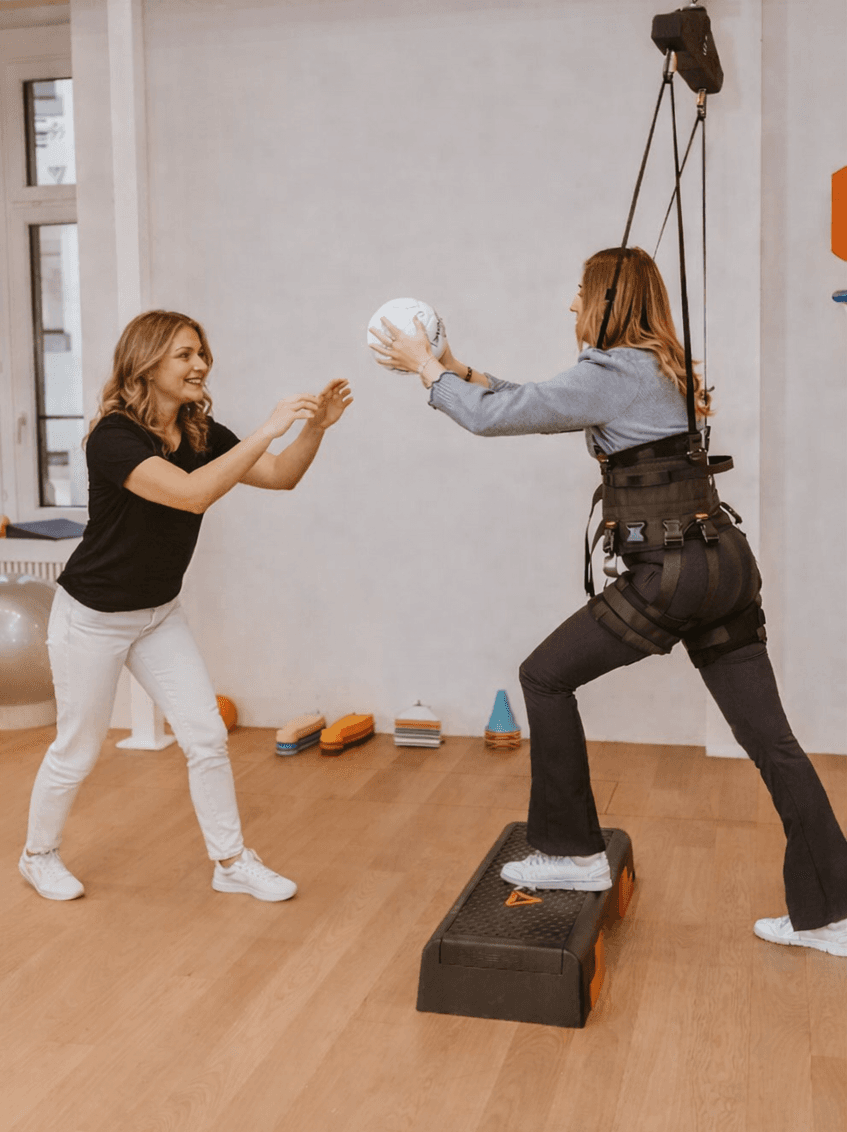
The transition home from inpatient rehabilitation is a decisive moment for many people with a spinal cord injury. For weeks or months the day was structured by therapy, an entire team was on hand, and progress was noticeable almost daily. At home that framework falls away. This is often where the worry arises that what was hard won will be lost again. The concern is understandable, but it need not prove true. The time after the clinic is not a phase of merely holding on; it is a phase in which genuine progress remains possible.
Why the nervous system still learns years later
For a long time it was held that functional potential after a spinal cord injury is exhausted after roughly a year. That assumption is outdated. In most spinal cord injuries the cord is not completely severed; nerve connections remain intact that are initially not sufficiently activated. These so-called incomplete lesions offer starting points for training. The spinal cord itself also possesses a considerable capacity to learn movement patterns when it is stimulated repeatedly and in a task-specific way. What is decisive is not how long ago the event occurred but how consistently and how intensively training is carried out.
Repetition at a dose that works
The central principle is this: many correct repetitions of a functionally meaningful movement. In conventional one-to-one therapy this is difficult to deliver where the legs are paralysed, because guiding the legs manually is physically very demanding for therapists and reaches its limits after a few minutes.
Robot-assisted systems solve this problem. In one gait training session, several hundred to more than a thousand guided steps at consistent quality are achievable. Body weight is unloaded in a controlled way, the support adapts to your actual activity, and at every moment you contribute as much as you can yourself. The same principle applies to the arms and hands with corresponding systems, which is especially important in tetraplegia, since even small improvements in grasping and holding can change independence considerably.
What counts besides walking
For people with a spinal cord injury, quality of life often turns on things that come up too rarely in conversations about rehabilitation. These include trunk stability and sitting balance, transfers from the wheelchair to the bed or into a car, the strength and resilience of the shoulders, control over spasticity, and the prevention of pressure sores and contractures. Cardiovascular capacity is relevant too, since many people move less in daily life than they did before the event.
A good outpatient programme therefore does not work exclusively on walking ability but on what concretely shapes your daily life. Whether the goal lies more in walking, in safe transfers or in hand function is something we determine together with you.
Making progress visible
Progress in this phase is slower than in the first months after the event, and subjectively it is barely perceptible in daily life. This is one of the most common reasons people discontinue therapy. We therefore record objective measures at every session, such as the number of active steps, the degree of your own contribution, the development of strength and the symmetry of loading. Viewed across weeks, this reveals a development that is lost in day-to-day experience. These data also help your treating doctors and the insurers to understand the benefit of the therapy.
How outpatient therapy is organised
Outpatient rehabilitation can be combined with work, training and family life. We generally recommend several sessions per week, since the nervous system changes durably only at sufficient frequency. More intensive blocks over a few weeks are also possible, for instance after an operation, after a longer break from therapy, or when a particular goal is to be reached. Transport, the provision of assistive equipment and coordination with the rest of your treatment team are part of what we handle.
In Switzerland the costs of neurological rehabilitation are covered, depending on the cause, by basic health insurance, disability insurance, accident insurance or military insurance. We charge nothing additional for the use of our robot-assisted systems and gait analysis.
If you would like to assess what potential remains in your situation, we invite you to a free pre-assessment in Zürich or St. Gallen. We take time for your starting point, show you the equipment and discuss openly what is realistically achievable and how cost coverage is arranged.
The next step
Talk to us about your situation.
In a free pre-assessment we discuss your medical history, your goals, and your insurance coverage options.
Book a consultation →